Sunday Sketches #4

To those who are unfamiliar with the origin of my series of “Celebrate” stamps, you may want to read this first.
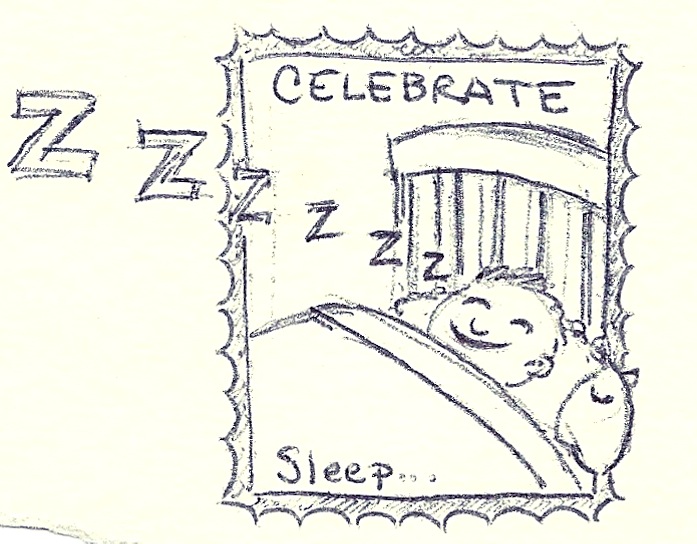
When I began this stamp business for my son, I had no idea just how much effort it would require. Stamps either had to be drawn early in the morning (while I was half asleep eating breakfast) or late at night (when I was half asleep and ready to go to bed). I don’t draw very well when I’m half asleep and, since I worked in ballpoint pen, I would often need to throw away several envelopes before I could manage something that looked halfway decent.

Another thing I discovered about being half asleep: good judgment sometimes fails to show itself. So a few of the stamps I worked on exhibit a noticeable lapse in good taste.
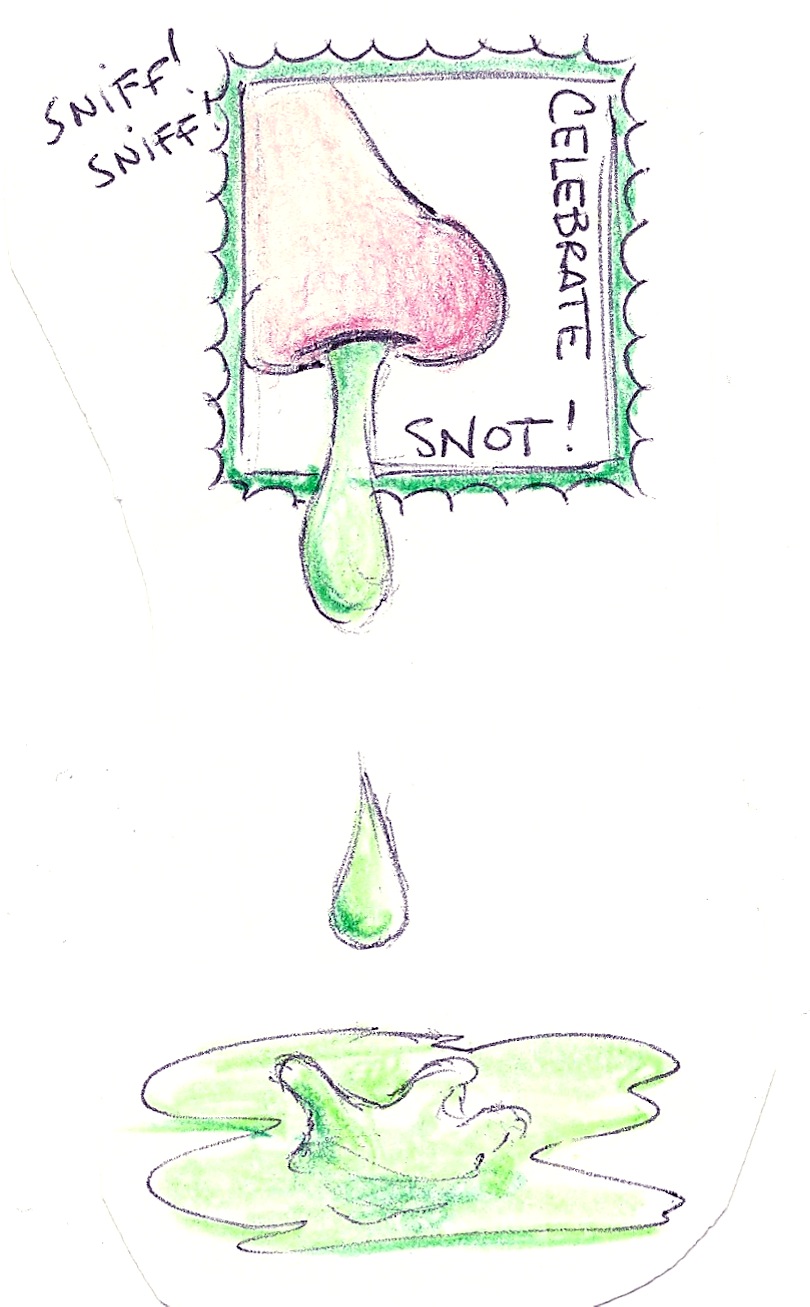
Often these stamps were inspired by current events. Surprise, surprise, on the day I drew this, my boy had a cold.

My sleepy, hard work on tasteless subject matter often paid off, though. Case in point: I discarded three envelopes before I finally got the right amount of explosive, flatulent pressure needed for “Celebrate Toots.” To this day, my son considers it to be my masterpiece.
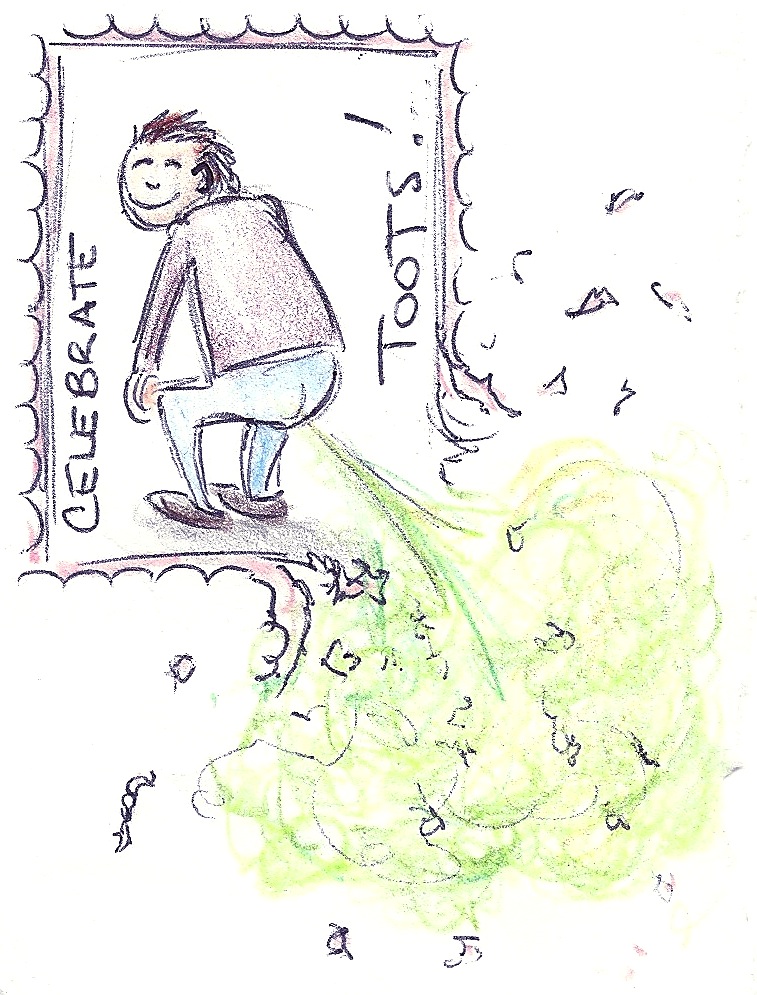
If you prefer, my sister calls them "hiney squeaks." My sister is insane.

Sara Hale: Fashionista Foe

Sarah Hale, the subject of my upcoming children’s book, is credited as the very first female magazine editor in America (though she preferred the title “editress”). Her Ladies’ Magazine, founded in 1828, was dedicated to patriotism, charitable causes, and – most significantly – educational opportunities for women. The publication was an instant hit, but readers still wanted a little something more. Letters soon began trickling into the editress’ office urging Sarah to print illustrations of what the modern European ladies were wearing this season.

Sarah had not one iota of interest in the fashonable ladies of Europe. In fact, after Sarah's husband died in 1822, the editress wore nothing but black for the rest of her life.

Sarah was not amused. Here she was, trying to use her magazine to forward the fortunes of women across the nation, and her readers only wanted to look at pretty dresses. Hale resisted the requests as best she could, but an editress does have to keep her subscribers happy – if she wishes to have subscribers.

Hand-colored fashion plates began to appear in Ladies’ Magazine in 1830, but Hale wasn’t going to print this fluff without first having her say. In an editorial, Hale made clear that fashion plates had no practical purpose. Each woman should not be a slave to what others are wearing; she should choose tasteful designs that suit her body type and colors that complement her skin tone. “This may be easily accomplished,” Hale scolded, “if our countrywomen would only think for themselves. At present American ladies, as regards to the fashion of their attire, rarely think more than did the ape when he put a red cap on his head because he saw such a one worn by the sailor.”

In short, Ladies’ Magazine readers would get pictures of women dressed up only after Hale gave them all a dressing down.

Old School Ideation

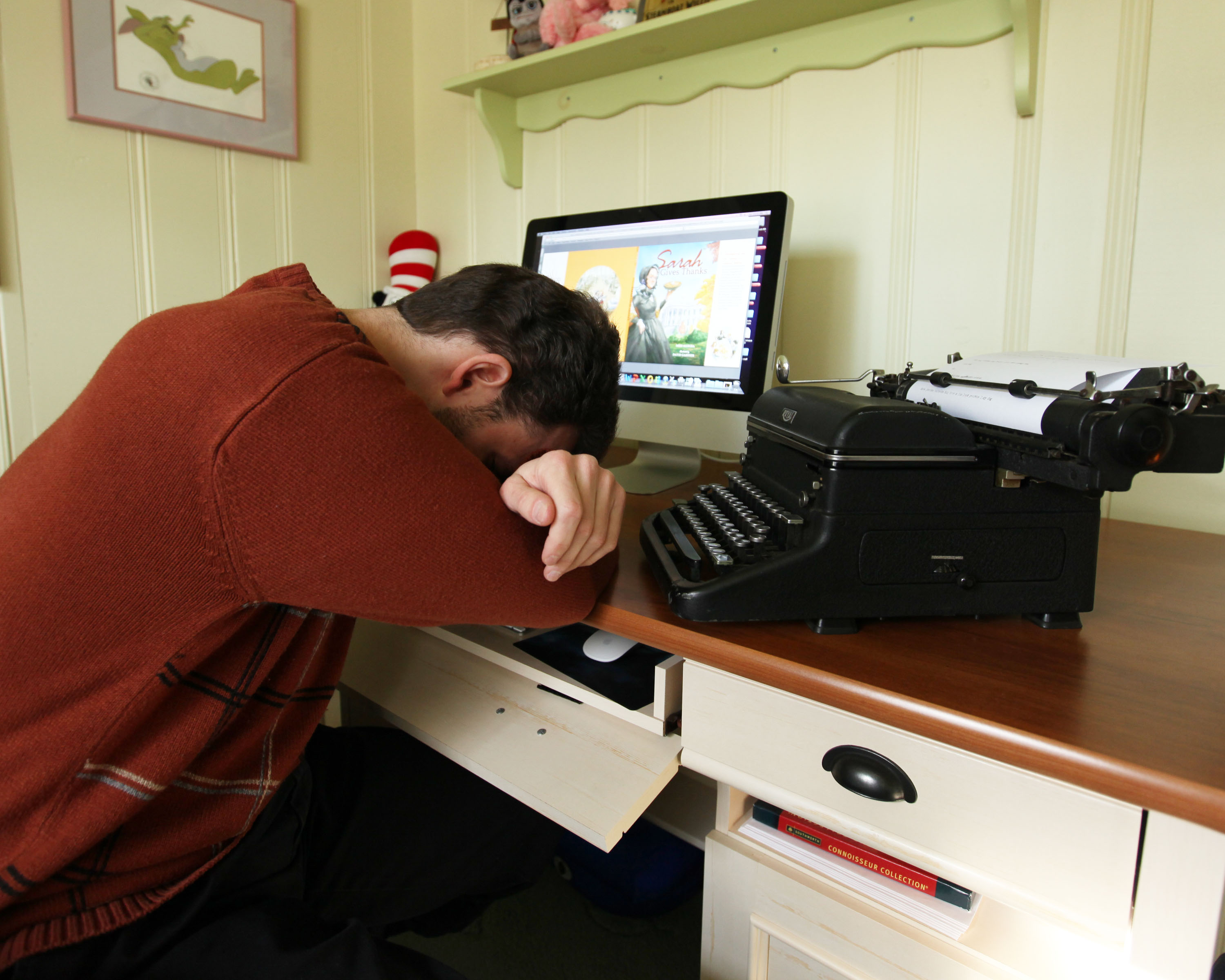
I don’t use my typewriter very much, but when I do it’s because I’m desperate. The Royal is dusted off on those days I’m simply incapable of stringing words together.

Hey, it happens to everyone.

I find that bad writing – I’m talking really bad, incoherent writing – is difficult to rewrite on a computer screen. I’m not sure why, but if I were to guess, it’s because programs like Microsoft Word, with their beautiful typefaces and perfect margins, make my awful stuff look too pretty. Writing that bad doesn’t deserve to look so good.

Enter my Royal. Everything I bang out on this baby says, “Don’t worry buddy. I’m clearly a first draft. Look at this ugly typeface. Look at how the “e” doesn’t quite line up with the other letters. Don’t take me too seriously. Don’t like that last thing you wrote?  Go back and cover it with a bunch of Xs! Who cares?”

Because my typewriter produces such a sloppy product, working on it is liberating. More importantly, it keeps me working.

I am not a terribly disciplined writer; I don’t have a regular writing schedule the way many others in this field do. So when I do manage to carve out some time for personal writing, I had better write something. My typewriter helps me when I find the time but lack the skill.

Almost every session I have with the Royal produces some kernel of an idea I can later develop. But even if every word I write is garbage, my typewriter is always there to console me.“Don’t worry buddy,” it tells me. “We didn’t make much progress, but didn’t we have fun?”

And a typewriter is as portable as an iPad!