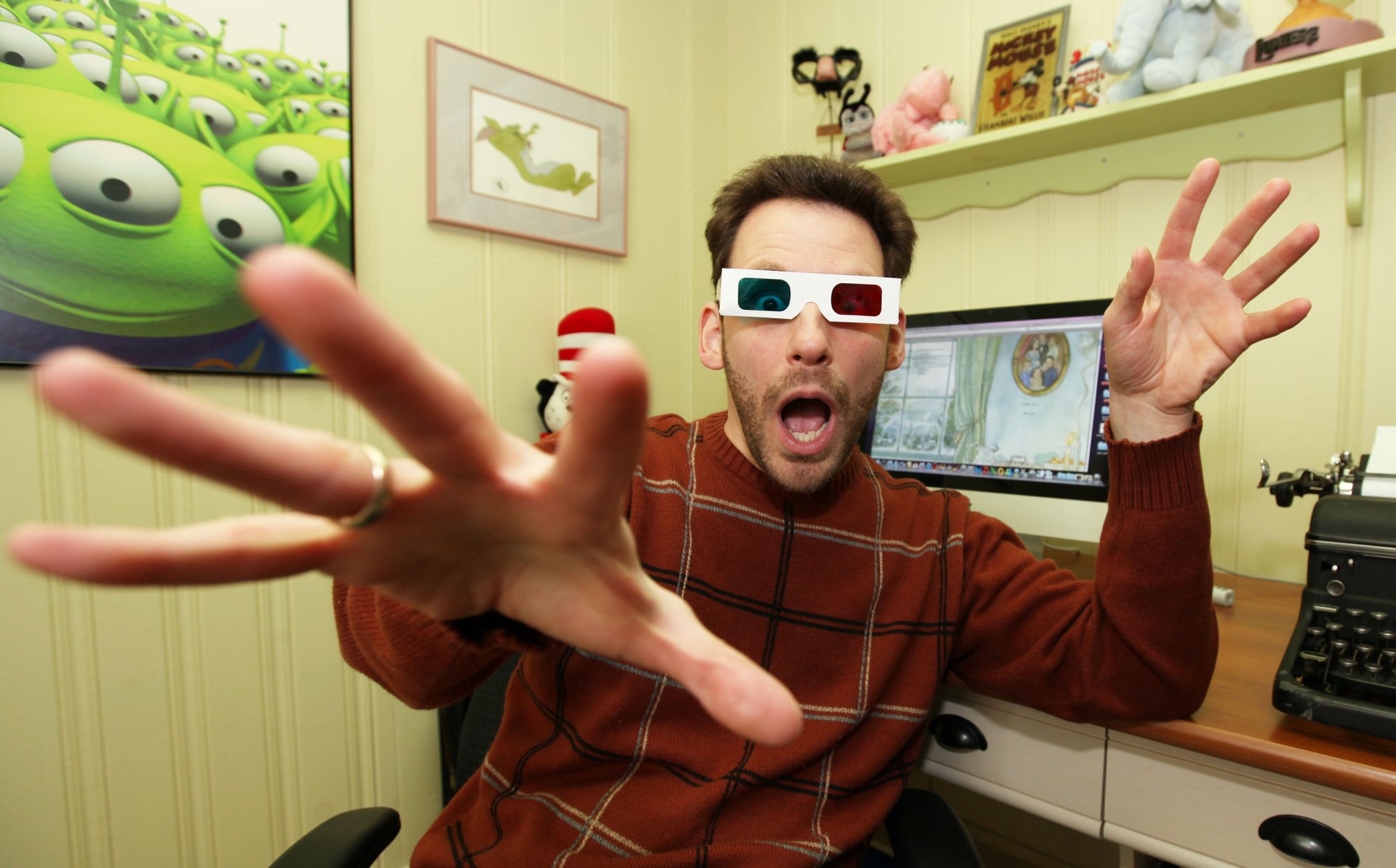
Doodle Do

superfly

When I was nine I decided to have a heart-to-heart conversation with my mother.

“I want to know how to draw,” I told her.

“You can draw. You draw all the time,” she replied.

“No. I want to know how to really draw,” I said. And Mom understood.

What I had been doing up to this point was filling one sketchbook after another with silly doodles – and, well, I was sick of it. My age was almost in the double digits. It was time to move to the next level. So I wanted Mom’s help (and Mom’s money) to become a real artist and create real things that looked really real.

Mom was very supportive of such things. She signed me up for lessons and, for the next eight years, I created some nice stuff. By the time I was 18, I was skilled in charcoal, watercolor, colored pencil, and oil – and was contemplating a career as a graphic designer. I assembled a portfolio good enough to get accepted into a design program at an excellent college.

Shortly after I unpacked my stuff in the freshman dorm, however, I discovered that I was sick of art. I’m not sure why this epiphany happened right after I paid my tuition bill, but it did; my new passion for playwriting had smothered the visual arts part of my brain.
pet peeve

I am a “finish what you start” kinda guy. That is to say, I am the kinda guy who understands that virtually nobody can earn a living as a playwright. I needed a fallback career, so I continued to stumble down the design path. I sleepwalked through my classes, rushed my studio projects, and hoped the professors would be in a generous enough mood to give me a low B. OK, a C was fine, too. Whatever. As long as I had time to write.

After I graduated, I worked as a designer for four years and life was very much the way it was when I was in college: My interest in design was half-hearted and my interest in playwriting nearly obsessive.

I got fired a lot.

Eventually I left design behind for good and found ways to write full time. What a relief that was. No more visual art. Occasionally, a family member (Dad) would ask why I don’t paint anymore.

“You were so good!” he’d say. Then he’d lead me to a wall. “Come here. Look at this painting you did. Isn’t it great?”

“You’re asking me to brag about my own stuff?” I’d ask.

“You should brag. Look at it!”

“Art no longer interests me,” I explained.

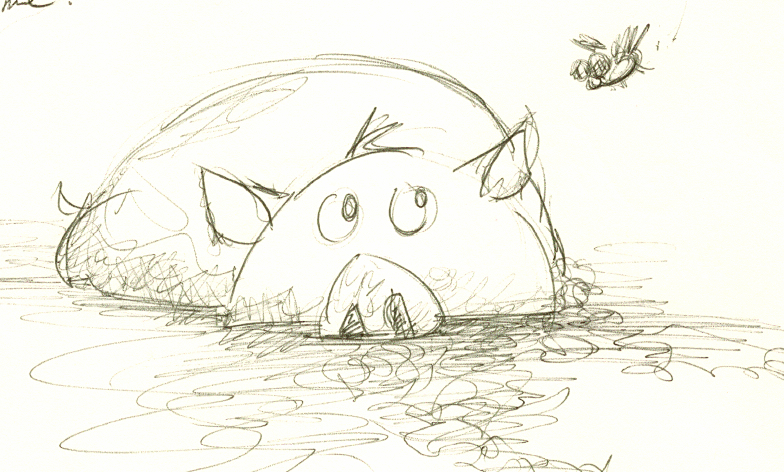
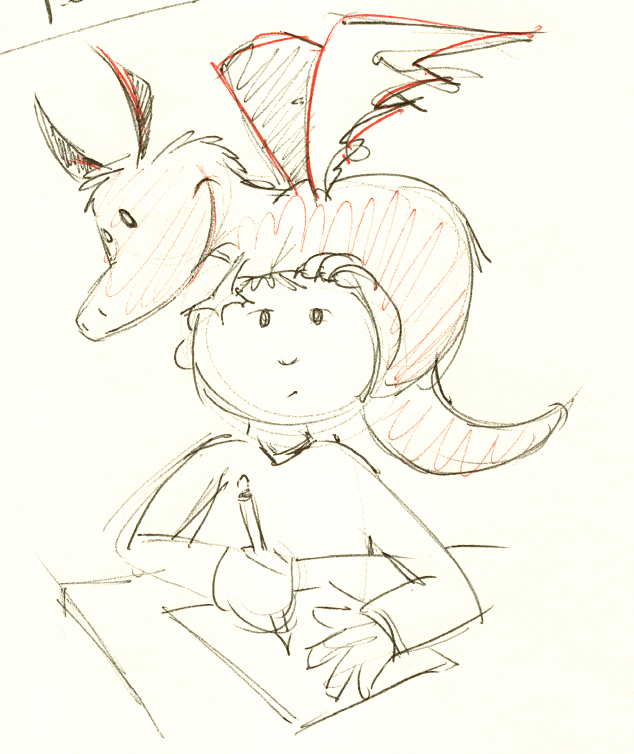
That, I discovered, was only half true. No, I have not touched watercolor paper or a canvas since college, but ever since I started writing for children, my zeal for doodling has returned with a vengeance. Thank goodness for that; I found that doodling can be an important tool for the children’s book writer.

Doodling is great way to take a break from a story without really taking a break from a story. When I’m stuck or need a little motivation, I’ll often turn away from the computer and draw a character or a scene from the story I’m trying to tell. This helps me keep my mind on the task at hand. But since I’m exercising a different part of my brain, it’s refreshing, too. I’m working and taking a break at the same time. That’s multitasking!

I also recently noticed that doodling is a great way to generate new ideas – which turned out to be invaluable last November when I participated in my first Picture Book Idea Month (PiBoIdMo). Without giving too much thought to what I was doing, I filled up one sketchbook after another with weird characters and situations. Many of the drawings were just plain awful, but they suggested stories I never would’ve come up with had I relied solely on putting words on a page.

To put it another way, I found inspiration by becoming nine again.

Ta Daa!

Put The Cat Out

I used to be allergic to this guy.

Perhaps my dislike of cats can be traced back to The Cat In The Hat.

My adult self can appreciate the punchy rhymes, solid story arc, and gorgeous pen and ink drawings. But a big part of me can’t help but consider Seuss’s most popular book to be a misfire of sorts. Seuss didn’t write for adults, he wrote for kids, and, as a kid, I found The Cat In The Hat to be terribly unsettling.

Think about it. Two children, perhaps seven years old, are home alone. That’s a vulnerable situation to be in. I had firsthand knowledge of this; I was a latchkey kid and was allowed to be home alone at about that same age. I liked having the house to myself because it made me feel very grown up, but those feelings of maturity were tempered by…was it anxiety? I’m not sure. But when I was alone, a teensy little thought sometimes niggled around in the back of my brain: “What if something happens?” I didn’t know what that something could be, but I did know that some somethings could be very dangerous. Would I be able to handle it? Would I know what to do? Could I keep safe?

The Cat In The Hat seemed engineered to tap into that fear. Without warning, or even a knock on the door, a cat, the size of an adult male, bursts into the house and demands that the children take part in reckless and destructive games that aren’t really games at all.

And this cat is a bully. At the first sign of protest – courtesy of a fussbudget fish – he retaliates with a game called “up-up-up with a fish,” perching the finned fellow’s glass bowl on the handle of his umbrella. When the fish protests further, the cat goes out of his way to make him even more alarmed, by grabbing and balancing more household objects until they all inevitably crash to the floor.

For the young me, that fish was The Cat In The Hat’s lonely bright spot. I loved that little guy. Even after a terrifying fall; even though he had to endure the humiliation of swimming in a pot; even though he was in direct conflict with a natural predator; that proud, brave little guy ripped that cat a new one.

Just take a peek at the fish’s post-fall rant:

“Now look what you did!”

Said the fist to the cat.

“Now look at this house!

Look at this! Look at that!…”

And on it goes. It’s a fabulous “I told you so” moment. Oh, I loved it so.

As a child I loved neatness and order. I liked to play by the rules. Because of this, I tended to gravitate toward wet blanket characters in children’s literature. My favorite Sesame Street Muppet? Bert. My favorite animal from Winnie the Pooh? Rabbit. I identified with characters who existed only to be tormented by the act-first-think-later Ernies and Tiggers of the world.

Fortunately, in Bert and Rabbit’s case, the worst punishment either character received was exasperation. That fish, however, was being threatened with bodily harm.

But the little guy still fought, God bless him!

The fish’s moral victory is a fleeting one, of course. A few moments later, the cat unleashes the Things, and the situation goes from bad to much, much worse.

At least the cat didn’t try to destroy the items he balanced on his umbrella. It was an accident. A stupid, selfish, dangerous, and entirely avoidable accident, but an accident nonetheless. Those Things, on the other hand, were wired differently. The destruction they wrought was deliberate. They delighted in it. I found it awful.

Yes, yes, I know. The boy in the story eventually springs into action and traps the Things in a net. Yes, the Cat cleans up the mess before the mother gets home. But that, in my view, did not make everything OK. That self-absorbed interloper created a lot of undue stress for the kids and that fish, all in the name of “fun” – fun that only he was having.

Not cool, cat. Not cool at all.

Dr. Seuss wrote a lot of stories with similar types of mayhem built in, but The Cat In The Hat was the only one I didn’t enjoy. It was a book that knew exactly how to push my buttons.

That said, I did, eventually, learn to appreciate The Cat In The Hat‘s charms. When my older sister was pregnant with her first child, I offered to paint a mural in the new nursery.

What I chose to paint was that confident cat, locked in eternal conflict with that marvelous, underappreciated fish.

This guy is about seven feet tall. Not pictured: two terrible Things flying kites. (Click to see larger.)
Fish detail. I love this guy. (Click to see larger.)