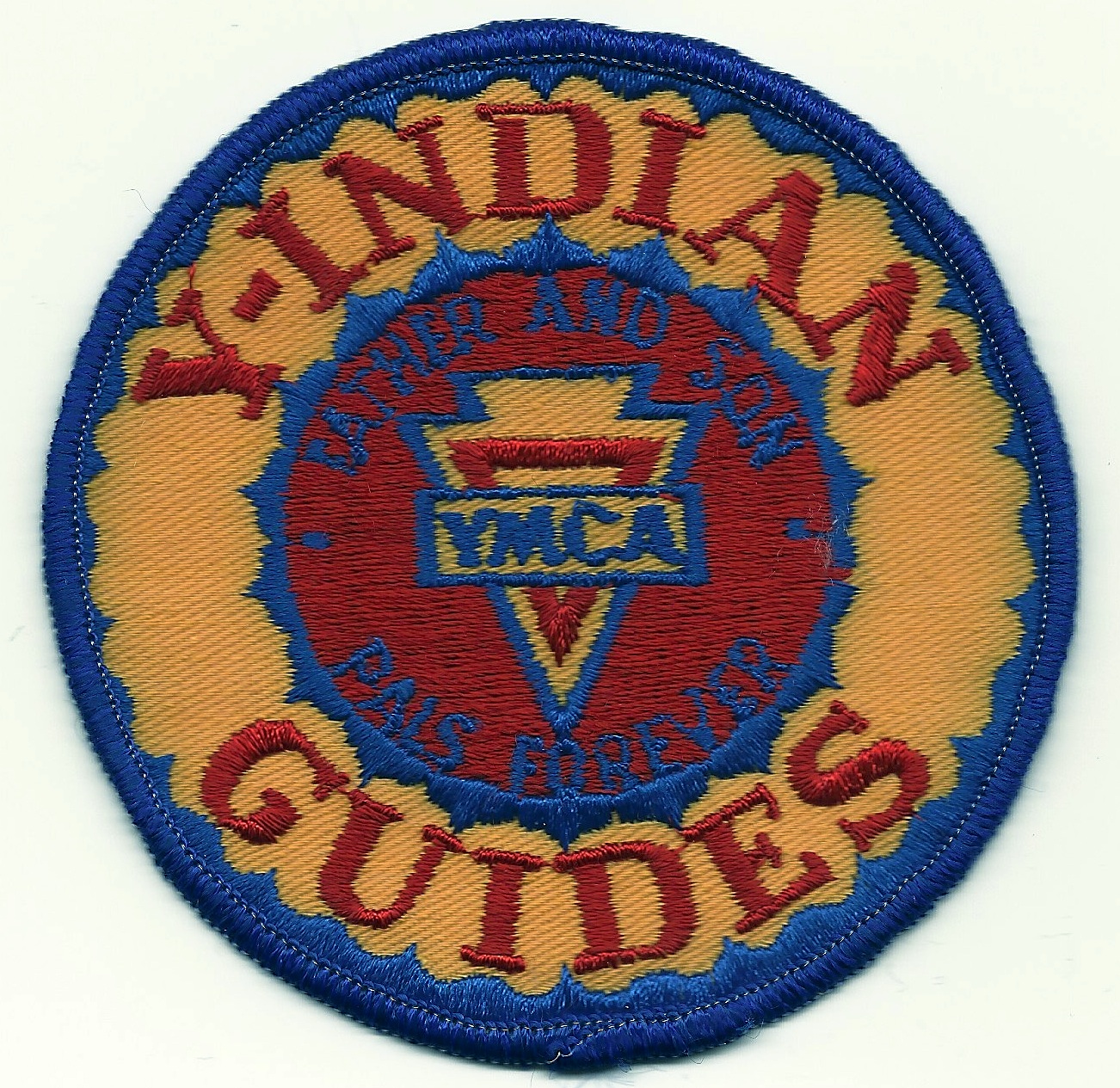
 Dad and I milled about in the Grand Union parking lot wearing matching brown leather vests and feathered headbands. Also matching were our expressions of dread.
We were members of Indian Guides, a father/son organization sponsored by the YMCA. When we first joined the group we didn’t know what to expect, but we safely assumed that it would involve hanging out in nature and respectfully acknowledging Native American culture. I was fine with this prospect. I liked nature; I spent the better part of the previous summer building – and endlessly repairing – a fort in the woods behind my house. I appreciated Indians, too; my fourth grade social studies teacher spent half the year teaching us about the Lenae Lenape Tribe.
A little Native American appreciation can a long way, however. Chief Grey Hawk, a doughy middle-aged man whose bald head glimmered like a strand of Christmas lights, had lots of appreciation to offer. According to him, there was no limit to one’s level of Native American appreciation.
No limit at all.
Chief Grey Hawk’s sentiments were earnest and honorable, of course. They were also boring. In one of our weekly meetings we spent a half hour appreciating an arrowhead.
He could barely contain himself. “Isn’t it amazing, Red Squirrel?” (My Indian Guides name was Red Squirrel.) “What you’re holding in your hands was used hundreds of years ago to hunt game! Just imagine it!”
I did. And for the remaining 29 minutes I imagined I was playing Atari.
A quick scan around the table indicated that I wasn’t the only young brave yearning to earn a high score in Yars Revenge. As one, the boys stared at their hands as if by doing so something interesting might appear there. Even Grey Hawk’s son, Red Robin, could barely stay awake.
Not all of our meetings were dull. Some of them highlighted our incompetence. One Saturday the chief drove the tribe to a wooded area in the middle of nowhere. This was a “trailblazing exercise,” he explained.
His plan was stunning in its reckless simplicity. He would drop off each father and son pair in a different, lonely area of the woods and provide vague directions to a distant meet-up point. Navigating by compass, we would try to find our way.
Once the entire tribe finally assembled at this location, we would, I assume, look at another arrowhead
I always liked walking in the woods. But the woods behind my house was in the middle of a suburb. No matter how far I walked, I was never more than 100 yards from some form of civilization: a house, a street, or a 7-11 dumpster. When Dad and I got out of the chief’s station wagon, there was nothing but trees in every direction for as far as the eye could see. The vastness of our surroundings sent a chill down my spine. The chief’s car disappeared down the dirt road, leaving Dad and me to fend for ourselves.
We’re doomed, I thought.
“Alright, you heard him,” Dad nodded. “A half mile northwest. Let’s go.” Dad had a way about him that made even the most difficult tasks sound easy.
Dad also had a way about him that made difficult tasks much more difficult. We hadn’t stumbled around in the woods for 20 minutes before he dropped my brand new compass in a river.
As I watched it blurble into the brownish murk, I heard my mother repeat her familiar bon mot: “If we were a pioneer family, we’d be dead in an hour.”
It’s hard to figure out where northwest is when you don’t have a compass. We tried navigating by sun. We both vaguely remembered something about moss facing north on tree trunks. (Or was it south? East maybe?) I suggested walking in a direction that “seemed right.” After Dad tripped for the fourth time on a hidden tree root, his cool demeanor, usually so impenetrable, fell away. It was replaced with a mumbling, grumbling running commentary with a common refrain: “What in the hell are we doing out here?”
We yelled for help. Eventually Gray Hawk found us.
The chief beamed. “Tall Oak!” (Dad’s Indian Guides name was Tall Oak.) “There you are! Thank goodness I was here or you might not have been found!”
Dad eyes turned into two malevolent slits. “If we weren’t here, I wouldn’t need finding.”
Dad was grateful when I faked the stomach flu to get out of the Indian Guides annual camping trip — but such insubordination came at a price; Chief Grey Hawk suddenly took a personal interest in making sure Dad and I planned to march with the tribe in the town’s Memorial Day Parade.
“We are all counting on you, Tall Oak,” Chief Grey Hawk intoned.
As the chief said this, the other dads and their sons nodded gravely in agreement. They had all gone on the camping trip. They had all endured Grey Hawk for 48 straight hours. The expressions on their faces indicated it was a waking nightmare.
Marching in the parade was the least we could do.
And so we stood in the Grand Union parking lot with the tribe — wedged between the Knights of Columbus and the Ramapo High School sousaphone section — waiting for our turn to go. Dad and I both knew that marching in this parade was going to be difficult and painful for us. I was born with a gimpy foot. Dad never fully recovered from a long ago injury when he shattered both of his legs.
This parade was going to be a Bataan Death March.
We waited and waited. The sun pounded us all into submission. It was so hot the tar used to fill in the parking lot’s cracks began to bubble. To pass the time, a few of the young braves and I sat on our haunches and poked the goo with a stick. Dad watched us do this without comment for a while before heading off to chat with the other Indian Guides fathers.
Dad was a gregarious fellow who took delight in boisterously holding court with other guys. Whenever I looked up from the tar, however, I noticed that this conversation was different. Dad had formed a hushed, conspiratorial huddle. Chief Grey Hawk was safely out of earshot.
The parade was predictably awful. I barely made it a tenth of a mile before my orthopedic shoes made my feet throb. By the half-mile mark I couldn’t walk another step. Dad and I broke off from the procession and found a shady spot on the wide porch of Miller’s Pharmacy.
I sighed with a sense of relief I had never known before or since. Indian Guides was awful, but it was over. It was finally over.
As if reading my thoughts, Dad leaned over and patted my back. “We’re going to give it one more year,” he said.
“What?! Why?!”
Tall Oak held up a reassuring hand. “I have a feeling things will get better.”
Before I could respond, Dad put his hands together for a cluster of marching Girl Scouts. Dad is the loudest clapper I know. “Hey, it’s Troop 27!” he bellowed. “That’s my favorite troop!”
In response, a beaming Troop 27 threw handfuls of Jolly Ranchers in our direction.


 Hey, Look! A Writer Fellow!