
Tales of a Sixth Grade Writer

The sixth grade me. I kept my writing talent in my hair.

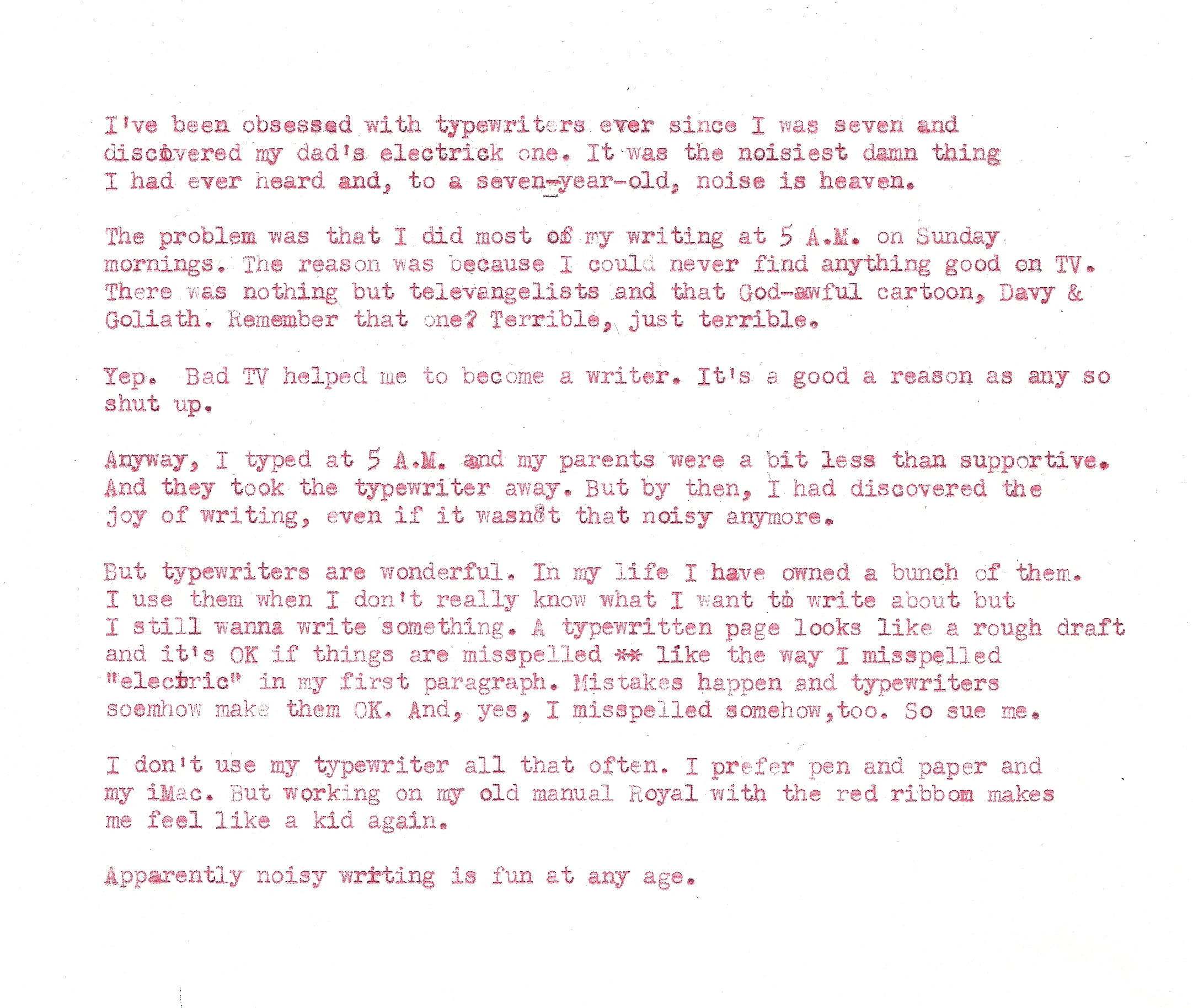
I mentioned in a previous post how Sunday morning TV programming helped kickstart my writing career.

Mrs. Snelback, however, was the one who kept me on the writing path for life.

Mrs. Snelback was my sixth grade teacher. She didn’t seem to like children all that much. The children didn’t seem to like her all that much, either. They did, however, fear and respect her.

I liked Mrs. Snelback. I understood her personality type; my Great Uncle Bill was very much like her, grumpy on the outside but a great person underneath. Uncle Bill got happy just like everyone else, but it was a subtle, non-demonstrative kind of happiness. Blink and you’d miss any outward signs of it. I made a point not to blink much around Uncle Bill. He fascinated me.

Snelback fascinated me, too. She was my hero because she, like me, hated the clique of obnoxious popular girls who abused people for sport. And, unlike every other teacher at Lincoln Elementary, Snelback refused to ignore these girls’ inner ugliness. She punished them with relish and reveled in their subsequent waves of whining.

“Oh, that isn’t fair?” Snelback would ask after the whiniest among them ran out of steam. “Well, life isn’t fair, honey.”

And because Snelback always enjoyed giving the knife just one more twist, she’d close with a mock frowny-faced, “Oh you poor thing!”

Snelback didn’t believe in sending people to the principal. Any misbehaving that took place in her room would be handled in her room, thank you very much.

One of Snelback’s favorite punishments was “The Infamous 100 Words.” If, for example, Tommy T. called out in class without raising his hand, Snelback would bellow, “THOMAS! 100 words on raising hands!”

And, that night, Tommy T. would have to write a 100-word essay on why it was important to raise your hand before speaking.

The Infamous 100 Words was like KP. Everyone had to deal with it sooner or later. I was no exception.

“MICHAEL!” Snelback bellowed. “100 words on talking in class!”

So be it.

When one of my classmates penned an Infamous 100 Words on talking in class, he would write that talking in class was rude to the children and the teacher.

He would then write that talking inhibited the learning process.

He would then write that he was sorry.

He would then write that when a kid talks in class…um…the Communists win.

On and on it went until a 70-word essay became an 80-word essay, and that 80-word became a 90-word, and that 90-word became a 95-word, and that 95-word became…still a 95-word, and…and…and…OH, COME ON! I JUST NEED FIVE MORE FREAKING WORDS! THINK! THINK!

As far as I was concerned, that was a stupid way to write The Infamous 100 Words. I had a different technique. I told a story:

Little Billy Bumpus leaned over to tell his neighbor the latest booger joke. Unfortunately the teacher heard. She stared hard at Billy, and, without a word, reached for the tiny key that hung around her neck. The class gasped. Some of the girls put their heads on their desks. They knew what was about to happen and didn’t want to see it.

The teacher unlocked the bottom drawer of her desk. Out popped the toe monster. It oozed from his home onto the floor and slithered down the aisle to Billy’s chair. Billy, resigned to his fate, gripped the sides of his desk as the toe monster wrenched off his shoe, yanked off his sock, and bit off Billy’s big toe down to the second knuckle.

“You have nine more chances to behave in this class, Mr. Billy Bumpus!” the teacher said. “Because once your toes are gone, so are YOU!”

There! 100 Words on talking in class. More like 150 words, but who’s counting?

My stories attracted Mrs. Snelback’s attention.

When Mom and Dad came to the next parent teacher conference, the first words out of Mrs. Snelback’s mouth was this: “Do you know what your son’s strongest subject is?”

“Reading,” Mom said. “He is always reading.” This was true.

“WRONG!” Snelback bellowed. “It is WRITING! Your son should be a writer. Your son WILL be a writer!”

The inference was that if I didn’t become a writer, it would be my mom’s fault.

I had wanted to be a writer since I was seven. I was now 12 and the desire to write was still strong. When Mom told me what Mrs. Snelback said, I wanted to be a writer more than anything in the world.

I wanted to prove Mrs. Snelback right. And she was right. Thanks to her, I’ll be a writer until the day I die.

So! Was there a teacher in your life who was particularly influential?
The Prose Poseur

They don't give these mugs to just anybody! (Thanks again, Sarah W!)
They don’t give these mugs to just anybody! (Thanks again, Sarah W!)

I went to my first children’s book critique group in 2006 at a local Borders Books & Music. Arriving with a few copies of my manuscript in hand, the group welcomed me with open arms. Better still, the critique I received that night was positive and thoughtful enough to give me a lot to chew on after things broke up. I was jazzed and energized. I wanted to get started on a revision right away.

So instead of going home, I set up shop in the café to slurp a latte and edit. I was working there for about 15 minutes when I noticed someone watching me. The woman, let’s call her Becky, was a member of the critique group. She had not brought a story, so I had no idea what kind of a writer she was. I did know, however, that she wasn’t a very good critiquer; her comments that evening were unfocused, benign, and across-the-board positive. At the time, I had pegged her as the type of person who went to great lengths to avoid conflict.

Right away her presence in the café struck me as peculiar. It had been 15 minutes since the meeting broke up and I was seeing her only now. She also seemed to have no intention of buying anything.

So when our eyes met it wasn’t an “Oh, hey, you needed a coffee too, eh?” kinda vibe. It was a bit more like a stalking. Not a legit, creepy one – instead, her stalking attempt was a lot like the way she critiqued my story: unfocused and benign.

Because I had noticed her, I had forced her to be social. “Oh, hi! I really liked your story. Really liked it.” she said as she approached the table.

“Thanks,” I replied.

“I was planning to have something to show for this meeting but I just couldn’t get around to it. I just couldn’t find the time.”  

“That can be tough sometimes.”

She nodded. She looked at her feet. Then Becky said, “Can I talk to you a minute?”

I did not want to talk to her for a minute. I had three reasons why:

The first reason was purely selfish; I wanted to revise my manuscript without interruption.

The second reason was because of the weirdness of this encounter; I wasn’t threatened by her stalkingishness, but I was uncomfortable with it.

The third and most important reason was that no one who asks, “Can I talk to you a minute?” ever follows it up with something you want to hear. Never. Ever.

But it’s almost impossible to say no to a “Can I talk to you a minute?” On its face it’s such a minor request, isn’t it? A minute? Anyone can spare a minute, right? What are you, some kind of selfish jerk? And even if you are a selfish jerk, do you really want to telegraph your jerkiness by saying no? And if you do say no, you then have to follow it up with more than a minute’s worth of lame reasons why you said no and, well, that’s just opening up a whole new can of worms.

So she said, “Can I talk to you a minute?” and I said, “Sure.”

So Becky began. “To be completely honest, I really do have time to write,” she said. “I just can’t. At night, after the kids are in bed, I pick up a book and read. For hours. I know I should be writing, but I don’t. I know I’ll hate myself if I don’t write, but I still don’t. I’m like, ‘Just one more chapter and then I’ll write.’ But then I go ahead and read another chapter and another chapter until it gets too late to get started. Then I feel guilty that I didn’t write and I go to bed hating myself. So I say, ‘I’ll do it tomorrow. I’ll write tomorrow.’ But then tomorrow comes and I do the same thing. I spend another night reading or watching TV or whatever.”

Her story went on for much longer than what I wrote here – a lot longer than a minute – but the above is the gist of it: procrastinate, guilt, repeat.

The two of us had been there together for about 20 minutes before she finally lobbed a question in my direction.

“What should I do?” she asked.

By the time this question came my way, I was fed up with Becky. I would’ve killed to have the amount of time she had to write. Not only did she squander this precious time night after night after night, but at this moment she was squandering my time, too.

So I said, “What should you do? Here’s an idea. Write something. Either that or acknowledge that you’re not a writer. From what I’m hearing, it sounds like you just like the idea of being a writer.”

It was as if I punched her in the face. And, in a way, I suppose I had.

Immediately I tried to soften my view without abandoning it. “Writers don’t have to be published or anything,” I went on. “But they do need to have a fire, you know, a desire to write. Do you have that?”

“Yes, I do!” she hissed, summoning a rage that I didn’t think she had in her. “I know I do because I want my name on book more than anything!”

That didn’t answer my question, but at that point, the answer would suffice, thank you. Whatever ended it.

Things wrapped up quickly after that. As she stormed out, Becky vowed to have a story to be reviewed next month and I was left alone. I had a knot in my stomach and was too ashamed of my jerkiness to focus on my story. The evening was a complete wash.

Becky didn’t show up to the next critique meeting. In fact, I never saw her again. A big part of me feels terrible about stomping on her dreams. They may have been pipe dreams, but they were hers and I had no right to lace up my hobnail boots.

Another part of me, however – the part that’s seven years older and enjoys forgiving myself – wonders if I might have done her a favor. Maybe that fateful night she learned something about herself. Maybe my actions gave her permission to enjoy her evenings without guilt. Maybe, after she puts the kids to bed, she can read and watch TV in peace, knowing who she is. There’s no shame in not being a writer. Quite the opposite, really.

Then, once in a while, I imagine that what I said was the kick in the butt that prompted Becky to act. Maybe she writes now. Maybe she found a new group. Maybe she’s published. Maybe I did a good and noble thing.

And maybe I have a few pipe dreams in me, too.