Put The Cat Out

I used to be allergic to this guy.

Perhaps my dislike of cats can be traced back to The Cat In The Hat.

My adult self can appreciate the punchy rhymes, solid story arc, and gorgeous pen and ink drawings. But a big part of me can’t help but consider Seuss’s most popular book to be a misfire of sorts. Seuss didn’t write for adults, he wrote for kids, and, as a kid, I found The Cat In The Hat to be terribly unsettling.

Think about it. Two children, perhaps seven years old, are home alone. That’s a vulnerable situation to be in. I had firsthand knowledge of this; I was a latchkey kid and was allowed to be home alone at about that same age. I liked having the house to myself because it made me feel very grown up, but those feelings of maturity were tempered by…was it anxiety? I’m not sure. But when I was alone, a teensy little thought sometimes niggled around in the back of my brain: “What if something happens?” I didn’t know what that something could be, but I did know that some somethings could be very dangerous. Would I be able to handle it? Would I know what to do? Could I keep safe?

The Cat In The Hat seemed engineered to tap into that fear. Without warning, or even a knock on the door, a cat, the size of an adult male, bursts into the house and demands that the children take part in reckless and destructive games that aren’t really games at all.

And this cat is a bully. At the first sign of protest – courtesy of a fussbudget fish – he retaliates with a game called “up-up-up with a fish,” perching the finned fellow’s glass bowl on the handle of his umbrella. When the fish protests further, the cat goes out of his way to make him even more alarmed, by grabbing and balancing more household objects until they all inevitably crash to the floor.

For the young me, that fish was The Cat In The Hat’s lonely bright spot. I loved that little guy. Even after a terrifying fall; even though he had to endure the humiliation of swimming in a pot; even though he was in direct conflict with a natural predator; that proud, brave little guy ripped that cat a new one.

Just take a peek at the fish’s post-fall rant:

“Now look what you did!”

Said the fist to the cat.

“Now look at this house!

Look at this! Look at that!…”

And on it goes. It’s a fabulous “I told you so” moment. Oh, I loved it so.

As a child I loved neatness and order. I liked to play by the rules. Because of this, I tended to gravitate toward wet blanket characters in children’s literature. My favorite Sesame Street Muppet? Bert. My favorite animal from Winnie the Pooh? Rabbit. I identified with characters who existed only to be tormented by the act-first-think-later Ernies and Tiggers of the world.

Fortunately, in Bert and Rabbit’s case, the worst punishment either character received was exasperation. That fish, however, was being threatened with bodily harm.

But the little guy still fought, God bless him!

The fish’s moral victory is a fleeting one, of course. A few moments later, the cat unleashes the Things, and the situation goes from bad to much, much worse.

At least the cat didn’t try to destroy the items he balanced on his umbrella. It was an accident. A stupid, selfish, dangerous, and entirely avoidable accident, but an accident nonetheless. Those Things, on the other hand, were wired differently. The destruction they wrought was deliberate. They delighted in it. I found it awful.

Yes, yes, I know. The boy in the story eventually springs into action and traps the Things in a net. Yes, the Cat cleans up the mess before the mother gets home. But that, in my view, did not make everything OK. That self-absorbed interloper created a lot of undue stress for the kids and that fish, all in the name of “fun” – fun that only he was having.

Not cool, cat. Not cool at all.

Dr. Seuss wrote a lot of stories with similar types of mayhem built in, but The Cat In The Hat was the only one I didn’t enjoy. It was a book that knew exactly how to push my buttons.

That said, I did, eventually, learn to appreciate The Cat In The Hat‘s charms. When my older sister was pregnant with her first child, I offered to paint a mural in the new nursery.

What I chose to paint was that confident cat, locked in eternal conflict with that marvelous, underappreciated fish.

This guy is about seven feet tall. Not pictured: two terrible Things flying kites. (Click to see larger.)
Fish detail. I love this guy. (Click to see larger.)

Celebrate Cats! Ugh.

And it has come to this.

As regular readers of this blog know, I am not a fan of cats.

I am horribly allergic.

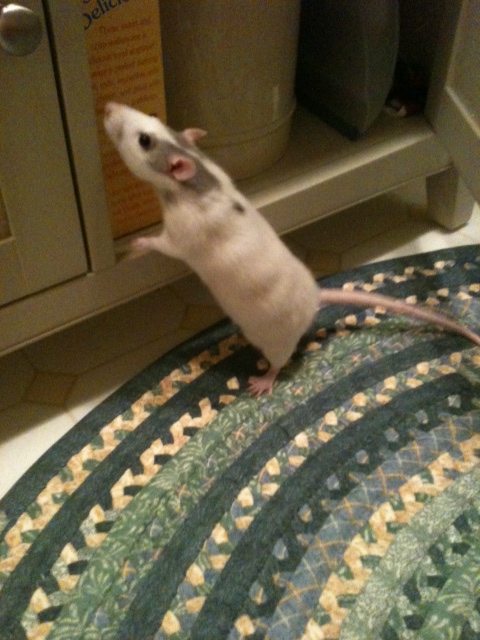
I am also a protector of the cute, fuzzy, little animals that cats enjoy killing. Like this angel:

Her names is Lucy and I looooove her.

So cats are not welcome anywhere near the Allegra house.

Many of you devoted cat owners out there have chosen to look past my anti-feline stance. You are wonderful, forgiving people who accept me for who I am. I thank you.

But one of you, using a form of extortion that would make Tony Soprano flinch, forced me draw a picture of one.

Just kidding. Jilanne Hoffmann is actually a wonderful person. A few months ago, she and I made a deal. Jilanne would use her son to promote my organization, Humans Against Celebrity Kid Stories (H.A.C.K.S.), and I, in turn, would draw a commemorative postage stamp on the subject of his choice.

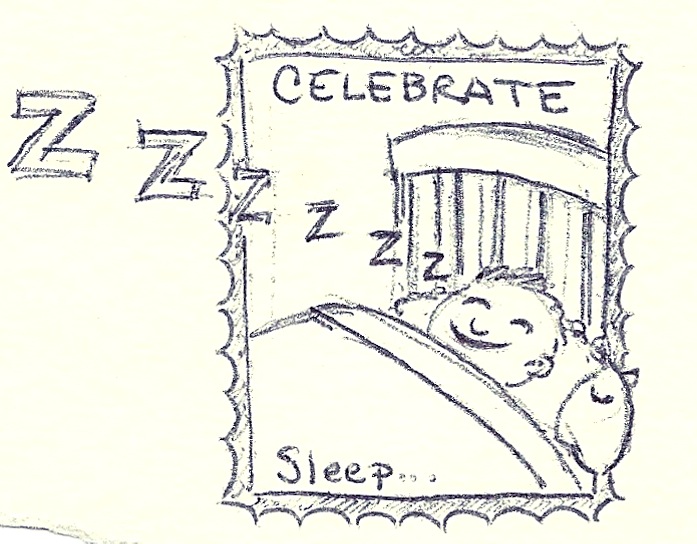
I used to draw these stamps all the time for my own son. Here’s a small sampling from Alex’s collection:

Celebrate Showers

Bed!

Celebrate sand

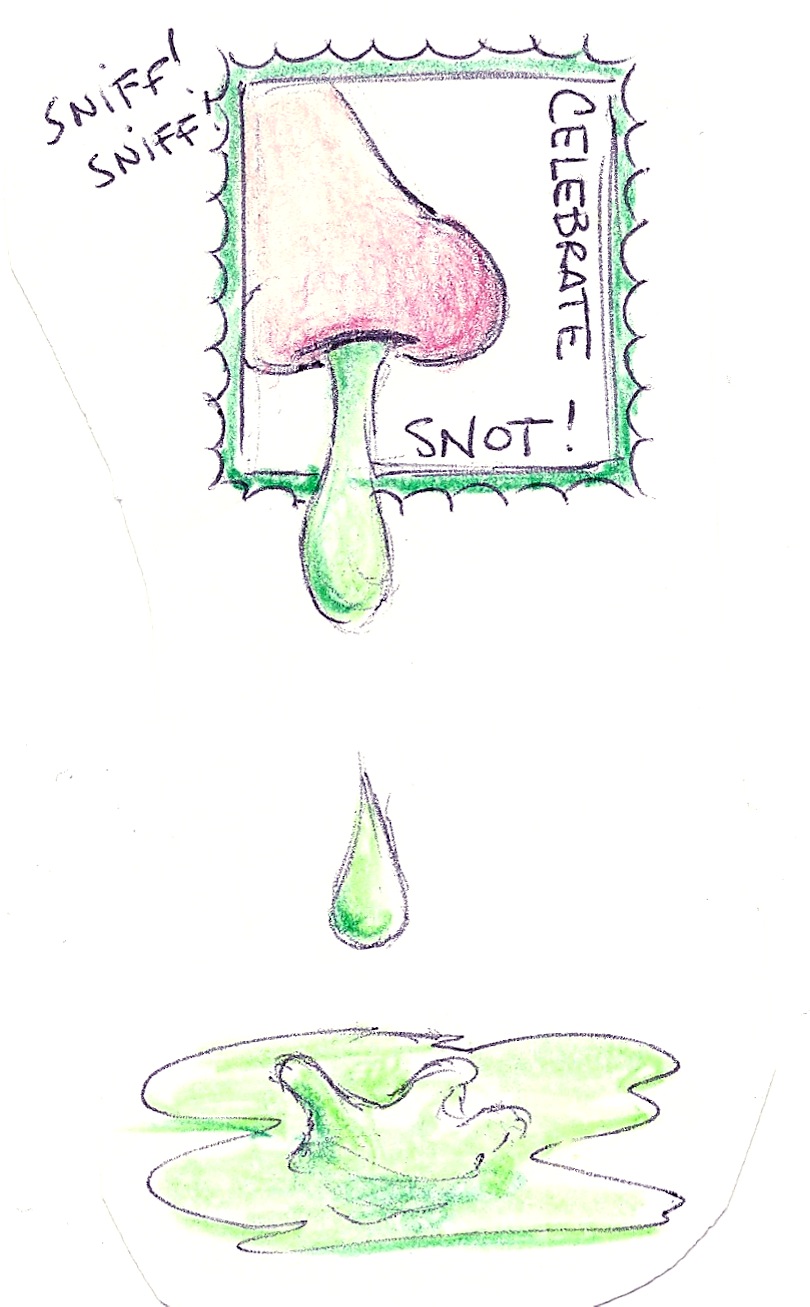
I also made Alex a couple of gross ones.

Snot!

Toots

Jilanne held up her end of the bargain, so I owed her son a stamp. Since her boy is nine, I assumed I would be drawing a sequel to Snot or Toots. So you can imagine my surprise when he asked for “Celebrate Cats.”

I tried to convince him otherwise. I truly did. Rats are cuter, I told him. Much cuter. But he was unpersuaded.

So here’s your cat, kid. You’ll get the original drawing in the mail in a few days. And don’t ask me for anything else until you learn how to properly appreciate rodents. I have a Celebrate Guinea Pigs stamp in me just aching to get out.

***

What’s that? You wanna be cool like Jilanne and join the H.A.C.K.S. team? Click HERE to learn about the organization and click HERE to become a member!

Tales of a Sixth Grade Writer

The sixth grade me. I kept my writing talent in my hair.

I mentioned in a previous post how Sunday morning TV programming helped kickstart my writing career.

Mrs. Snelback, however, was the one who kept me on the writing path for life.

Mrs. Snelback was my sixth grade teacher. She didn’t seem to like children all that much. The children didn’t seem to like her all that much, either. They did, however, fear and respect her.

I liked Mrs. Snelback. I understood her personality type; my Great Uncle Bill was very much like her, grumpy on the outside but a great person underneath. Uncle Bill got happy just like everyone else, but it was a subtle, non-demonstrative kind of happiness. Blink and you’d miss any outward signs of it. I made a point not to blink much around Uncle Bill. He fascinated me.

Snelback fascinated me, too. She was my hero because she, like me, hated the clique of obnoxious popular girls who abused people for sport. And, unlike every other teacher at Lincoln Elementary, Snelback refused to ignore these girls’ inner ugliness. She punished them with relish and reveled in their subsequent waves of whining.

“Oh, that isn’t fair?” Snelback would ask after the whiniest among them ran out of steam. “Well, life isn’t fair, honey.”

And because Snelback always enjoyed giving the knife just one more twist, she’d close with a mock frowny-faced, “Oh you poor thing!”

Snelback didn’t believe in sending people to the principal. Any misbehaving that took place in her room would be handled in her room, thank you very much.

One of Snelback’s favorite punishments was “The Infamous 100 Words.” If, for example, Tommy T. called out in class without raising his hand, Snelback would bellow, “THOMAS! 100 words on raising hands!”

And, that night, Tommy T. would have to write a 100-word essay on why it was important to raise your hand before speaking.

The Infamous 100 Words was like KP. Everyone had to deal with it sooner or later. I was no exception.

“MICHAEL!” Snelback bellowed. “100 words on talking in class!”

So be it.

When one of my classmates penned an Infamous 100 Words on talking in class, he would write that talking in class was rude to the children and the teacher.

He would then write that talking inhibited the learning process.

He would then write that he was sorry.

He would then write that when a kid talks in class…um…the Communists win.

On and on it went until a 70-word essay became an 80-word essay, and that 80-word became a 90-word, and that 90-word became a 95-word, and that 95-word became…still a 95-word, and…and…and…OH, COME ON! I JUST NEED FIVE MORE FREAKING WORDS! THINK! THINK!

As far as I was concerned, that was a stupid way to write The Infamous 100 Words. I had a different technique. I told a story:

Little Billy Bumpus leaned over to tell his neighbor the latest booger joke. Unfortunately the teacher heard. She stared hard at Billy, and, without a word, reached for the tiny key that hung around her neck. The class gasped. Some of the girls put their heads on their desks. They knew what was about to happen and didn’t want to see it.

The teacher unlocked the bottom drawer of her desk. Out popped the toe monster. It oozed from his home onto the floor and slithered down the aisle to Billy’s chair. Billy, resigned to his fate, gripped the sides of his desk as the toe monster wrenched off his shoe, yanked off his sock, and bit off Billy’s big toe down to the second knuckle.

“You have nine more chances to behave in this class, Mr. Billy Bumpus!” the teacher said. “Because once your toes are gone, so are YOU!”

There! 100 Words on talking in class. More like 150 words, but who’s counting?

My stories attracted Mrs. Snelback’s attention.

When Mom and Dad came to the next parent teacher conference, the first words out of Mrs. Snelback’s mouth was this: “Do you know what your son’s strongest subject is?”

“Reading,” Mom said. “He is always reading.” This was true.

“WRONG!” Snelback bellowed. “It is WRITING! Your son should be a writer. Your son WILL be a writer!”

The inference was that if I didn’t become a writer, it would be my mom’s fault.

I had wanted to be a writer since I was seven. I was now 12 and the desire to write was still strong. When Mom told me what Mrs. Snelback said, I wanted to be a writer more than anything in the world.

I wanted to prove Mrs. Snelback right. And she was right. Thanks to her, I’ll be a writer until the day I die.

So! Was there a teacher in your life who was particularly influential?